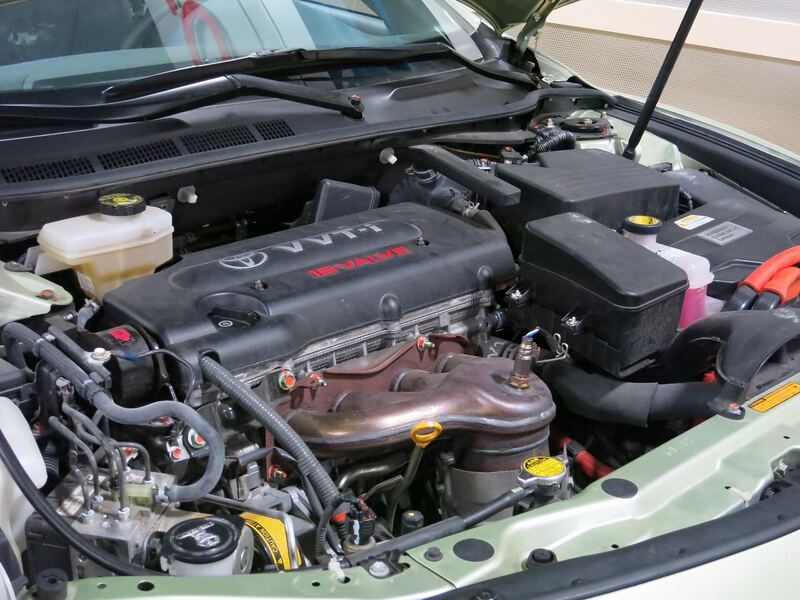
Picture this. You pull the dipstick a month after an oil change and it's barely touching the bottom mark. No puddle in the driveway, no drips. The oil isn't leaking out. It's getting burned inside the engine. On these Camrys that's a known pattern, not bad luck.
Which Camrys are affected
Toyota's own ZE7 program document (filed with NHTSA) lists the vehicles it covered for excessive oil consumption on the 2AZ engine:
| Model | Model years in the program |
|---|---|
| Camry | 2007-2009 |
| Camry Hybrid | 2007-2011 |
| Camry Solara | 2007-2008 |
| Corolla | 2009-2011 |
| RAV4 | 2006-2008 |
A few things that list tells you. The V6 Camry was not part of it, since the program was about the 2AZ four-cylinder. And the regular gas 2010-2011 Camry is not on the list either, so if you have one of those, don't assume this is your problem. The hybrid is the exception, with coverage running through the 2011 model year.
What Toyota's program actually did
The fix was real engine work, not a pat on the head. Under ZE7, a dealer first ran an oil consumption test: fill the engine to the max mark, seal it, have you drive roughly 1,100 to 1,300 miles, then measure what's gone. If the engine burned more than the limit in Toyota's service bulletin (T-SB-00158-14), the dealer replaced the internal parts that bulletin calls for. The job took about two days and came with a rental car.
Coverage ran through October 31, 2016 no matter the mileage, and after that for 10 years from first use or 150,000 miles, whichever came first. Do the math on a 2009 and you land in 2019 at the latest. So today, you're paying for any fix yourself.
How to tell if yours is really burning oil
- Check the dipstick at every fill-up for a few weeks. Park on level ground, engine off and cooled down a bit. Write down the level and the mileage.
- Look for blue-gray smoke at startup or when you hit the gas after idling.
- Look underneath. Wet spots on the engine or a drip on the ground means a leak, which is a different (often cheaper) problem.
- Watch the oil light. If it flickers in turns or at stops, the level is already very low. Pull over and add oil.
Rule out the cheap stuff first
Before anyone talks pistons, make sure oil isn't simply leaking. A seeping valve cover gasket is a common source of oil on the outside of the engine. RepairPal estimates a Camry valve cover gasket replacement at $275-$380. That's a much happier bill than an engine rebuild.
Also make sure the last shop that changed your oil filled it to the right level with the right grade. Under-filling at the oil change can look a lot like consumption.
What it costs now
| Option | What owners report or estimates show | The deal |
|---|---|---|
| Keep topping off | Cost of oil only | Most common choice on high-mileage cars |
| Fix a leak first | $275-$380 (RepairPal, Camry valve cover gasket) | Only helps if it's leaking, not burning |
| Piston and ring repair or engine rebuild | Typical $1,230 (2009) to $2,420 (2007), per CarComplaints owner reports | Fixes the root cause |
| Replacement engine | Get two or three quotes | Price swings a lot by engine source and mileage |
The CarComplaints numbers come from owner reports, not a price list. They're useful for a gut check. The average mileage when owners reported the problem was about 97,500 miles (2007) and 96,600 miles (2009), so it tends to show up around the 100,000-mile mark.
When to call a shop
Call a pro if you're adding more than a quart between oil changes and it's getting worse, if you see smoke, if the oil light comes on, or if the check engine light starts flashing (oily spark plugs can cause misfires). A good shop can run its own consumption check plus a compression or leak-down test to see how worn the rings are.
What to ask before you pay
- Is this burning or leaking? Show me.
- Are you replacing pistons and rings, or the whole engine?
- New, rebuilt or used engine, and how many miles on it?
- What warranty comes with the work?
- Does the quote include new spark plugs, gaskets and fluids?
Is it worth fixing?
Say your 2008 Camry has 160,000 miles, a clean body and a good transmission, and it drinks a quart every 1,000 miles. Honestly? Topping it off is the cheapest fix there is. Check the oil weekly, change it on schedule, and drive on.
It's worth paying for a rebuild when the burning is heavy, the rest of the car is solid, and the quote is well below what a replacement car would cost you. If the quote is creeping toward what the car would sell for, it's time to run the numbers or sell it as-is. Price out everything else on the Toyota Camry repair page, and if your brakes are due too, see our Camry brake pad cost guide.
Costs checked October 14, 2026.