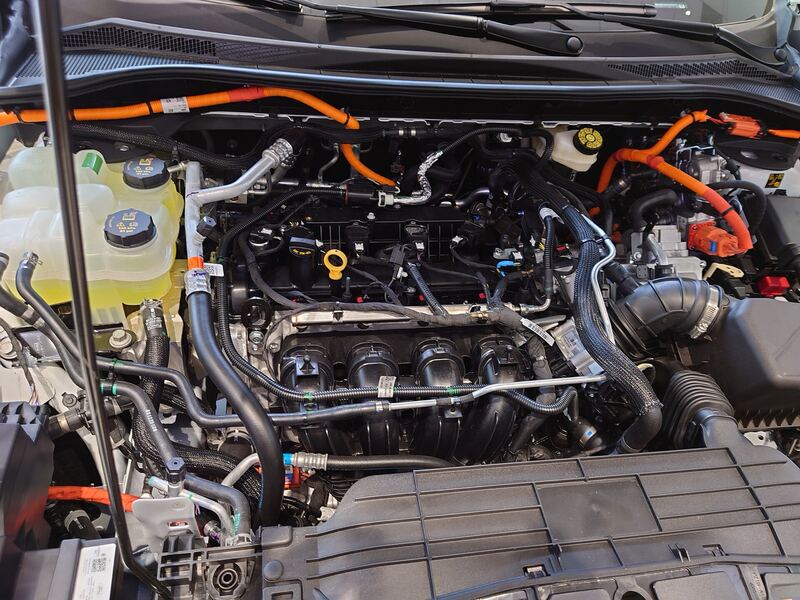
The 1.5L engines in the Escape get a lot of hate online. Some of it is earned. But the Escape actually has two separate 1.5L stories, and mixing them up can cost you money. First job: figure out which Escape you have.
Which problem matches your year
| Model years | Engine | Main issue | Free fix? |
|---|---|---|---|
| 2017-2019 | 1.5L EcoBoost | Internal coolant loss, white smoke | No recall. Covered only if under warranty |
| 2020-2023 | 1.5L | Fuel injector can crack and leak fuel | Yes, recall 22V-859 |
Your engine size is on the window sticker, the registration paperwork or the emissions label under the hood. If you're not sure, a Ford dealer can tell you from the VIN.
2017-2019: the coolant that keeps vanishing
Ford's Special Service Message SSM 47849 (March 2019) covers some 2017-2019 Escapes and 2014-2019 Fusions with the 1.5L EcoBoost that are using coolant and blowing white smoke. Ford tells dealers to look for coolant loss at the joint between the engine block and the head gasket, where the block surface can show erosion, pitting or flatness problems.
Interesting detail: Ford says the cylinder heads it got back all passed inspection. So the problem is the block side, not the head. That matters for cost, because a simple head gasket swap may not fix it if the block surface is damaged.
How it usually shows up:
- The coolant reservoir keeps dropping, but there's no puddle under the car
- White, sweet-smelling smoke from the tailpipe, especially on startup
- A low coolant warning or the temperature gauge climbing
Easy checks you can do
- Mark the coolant level. With the engine cold, put a piece of tape at the coolant level on the reservoir. Check it again after a few days of driving. Steady drops with no visible leak point inside the engine.
- Look for outside leaks first. Hoses, the radiator and the water pump area can leak too, and those are much cheaper fixes.
- Ask for a cooling system pressure test. Ford's procedure pressurizes the system to 20 psi and holds it for 5 hours. If it drops by 4 psi with no outside leak, internal coolant loss is confirmed.
What the coolant repair costs
| Model year | RepairPal head gasket estimate |
|---|---|
| 2013 | $2,902-$3,936 |
| 2014 | $2,922-$4,003 |
| 2015 | $3,069-$4,218 |
| 2016 | $3,128-$4,277 |
| 2017 | $3,074-$4,084 |
RepairPal lists these by model year, not by engine, and 2013-2016 Escapes didn't have the 1.5L engine. We include them so you can see the trend. RepairPal doesn't show a 2018 or 2019 figure, but those years use the same 1.5L EcoBoost as the 2017, so expect a similar ballpark. If the block surface is damaged, the shop may recommend a new short block or engine instead, which costs more. Ford's bulletin itself tells dealers to run a cost comparison and pick the cheapest proper repair.
2020-2023: the fuel injector recall
Recall 22V-859 (Ford 22S73) covers 2020-2023 Escapes and 2021-2023 Bronco Sports with the 1.5L engine, about 521,778 vehicles in total. A fuel injector can crack and leak gas into the engine bay. Near a hot engine or exhaust, that's a fire risk.
The free dealer fix is a software update that adds fuel injector leak detection, plus a drain tube. Note what it doesn't do: NHTSA's later review says the remedy doesn't include replacing the cracked injector. The idea is that the software catches a leak and the drain tube routes fuel away from hot parts.
NHTSA also opened a review in April 2024 (RQ24-008) of a related recall, 24V-187, which covers about 42,652 2022 Escapes and 2022-2023 Bronco Sports. Recalls on this engine have been updated more than once, so run your VIN at nhtsa.gov/recalls even if you think it's been done.
What to ask the shop before paying
- "Did the pressure test confirm internal coolant loss?" (For 2017-2019.)
- "Are you replacing just the head gasket, or does the block need work?"
- "Would a replacement engine cost less than repairing this one?"
- "Are there any open recalls on my VIN?" (Always, but especially 2020-2023.)
Is it worth fixing?
For the 2020-2023 injector recall, yes, obviously. It's free and it's a fire risk. Go now.
For a 2017-2019 Escape with confirmed coolant loss, it's a money call. A $3,000-$4,000+ repair on an older compact SUV can approach what the car is worth. Look up its value, add up any other repairs it needs, and compare. If the rest of the car is solid and you plan to keep it for years, a proper repair or a replacement engine can make sense. If it also needs tires, brakes and a transmission service, selling it as-is might be the smarter play.
Find every Escape repair on the Ford Escape page. Tire light on as well? See our Escape tire pressure light guide. Prices checked October 14, 2026.