The 4Runner is built like a truck because it is one. That's great on a trail and fine on the highway, until something up front starts clunking every time you hit a pothole. The good news: most 4Runner suspension noises have a short list of usual suspects. The less good news: one of them, X-REAS, can get expensive.
What X-REAS is (and whether you have it)
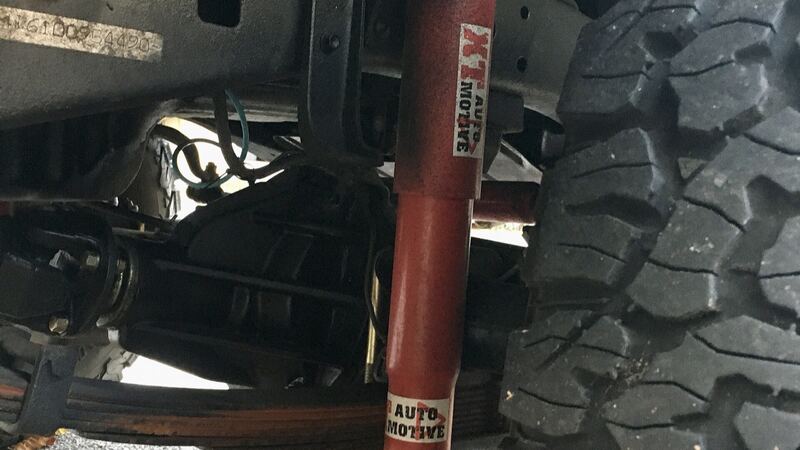
X-REAS stands for Cross Relative Absorber System. Instead of four independent shocks, the front shocks are hydraulically linked to the opposite rear shocks (front left to rear right, front right to rear left) through tubes and a center control absorber. The idea is flatter cornering on the road without hurting off-road travel.
SlashGear says it was offered on select trims like the Limited, and last appeared on fifth-generation Limited and TRD Sport models. It's not on the sixth-generation 4Runner that arrived for 2025. Not sure if yours has it? Look underneath for hydraulic lines running from the shocks to a center control unit.
The catch is leaks. Shock Warehouse, which sells replacement shocks, notes that X-REAS joints tend to leak, more so after a first repair, and that later failures usually mean replacing the whole system: shocks, control absorber and tubes.
What owners report (and paid)
| Problem | 4Runner year | Reported cost (TrueDelta) |
|---|---|---|
| Sway bar bushings and end links | 2010, 82k mi | $343 |
| Tie rod ends and stabilizer links (front clunk) | 2010 | $300 |
| Sway bar and steering rack bushings (clunk) | 2010 | $1,450 |
| Worn lower ball joint, aftermarket arms | 2018, 85k mi | $700 |
| Upper and lower control arms, both sides | 2010 4WD, 90k mi | $3,200 |
| X-REAS full replacement quote | 2010 | $3,500-$3,800 |
| X-REAS leaking, mostly warranty | 2011, 46k mi | $4,500 estimate |
| Four shocks/struts, conventional | 2014, 122.5k mi | $800 |
| Leaking struts replaced | 2013, 112k mi | $1,950 |
| KDSS fault | 2010 4WD | C$150-C$240 |
These are individual owner reports, not price quotes, but they show the pattern. Links and bushings are cheap. Arms and ball joints are mid-range. X-REAS is the expensive one.
How to tell what's wrong
- Clunk over small bumps at low speed: sway bar end links or bushings, the cheapest fix on the list.
- Clunk when turning or braking, loose steering, uneven tire wear: ball joints, tie rod ends or control arm bushings.
- Oily, wet shock bodies, bouncy ride, rear end squats: leaking shocks. On X-REAS trucks, also check the hydraulic lines and center unit.
- Squeak or groan over bumps: bushings or a coil spring rubbing. One 2014 owner's squeak was a rubbing spring.
- KDSS warning light (TRD Off-Road, Trail and some others): the Kinetic Dynamic Suspension System is a separate hydraulic sway bar system. Owners' fixes were electrical or the KDSS unit itself.
- Humming that changes with speed: probably a wheel bearing, not suspension. TrueDelta shows wheel bearings are a common 2010-2019 repair.
X-REAS: replace or convert?
| Option | What's involved | Trade-off |
|---|---|---|
| Replace X-REAS with OEM parts | Shocks, control absorber, lines | Keeps factory ride, owners quoted $3,500+ |
| Convert to four conventional shocks | Replace all four shocks, delete the linked system | Much cheaper, Shock Warehouse says it won't set warning lights because X-REAS isn't tied to the computer |
Shock Warehouse notes dealers often recommend converting, and TrueDelta has a 2010 owner who was told the same by Toyota. Since X-REAS isn't monitored by the truck's computer, conversion is a common, reasonable fix. Do all four corners at once.
What to ask the shop
- "Which exact part is making the noise, and can you show me the play?"
- "Does my truck have X-REAS or KDSS?"
- "If X-REAS is leaking, what's the price to convert versus repair?"
- "Will I need an alignment after this, and is it included?"
Is it worth fixing?
Yes. Suspension parts wear out on every truck, and a 4Runner is worth keeping on the road. Start with the cheap suspects (links and bushings), insist on a real diagnosis before arms or X-REAS, and if X-REAS leaks on an older truck, converting to good conventional shocks is usually the smart money. More 4Runner help is on the Toyota 4Runner page, and see our 4Runner brake cost guide for pads, rotors and calipers. Costs checked October 14, 2026.