Brake pads are the most normal repair there is. The trick on a Malibu is telling a routine pad job apart from the two or three problems that look similar but cost a lot more. Here's how to sort it out before you hand over your keys.
What brake pads cost on a Malibu
| Job | Who does it | Estimated cost |
|---|---|---|
| Pads, one axle, 2016-2021 Malibu | Shop (RepairPal average) | $319 to $376 |
| Pads, one axle, 2022-2025 Malibu | Shop (RepairPal) | $291 to $348 |
| Pads plus rotors, one axle | Shop | Higher, ask for a separate rotor line on the quote |
| Brake vacuum pump, 2016-2025 | Shop (RepairPal) | $549 to $732 |
| Pads, DIY | You | Cost of pads and basic tools |
RepairPal's pad number doesn't say front or rear, so assume it's one axle and ask your shop to quote both separately. Front pads usually wear faster because they do most of the stopping.
Squeal, grind, or hard pedal: what each one means
- High-pitched squeal when braking. Most pads have a small metal tab that squeals when the pad gets thin. That's your polite reminder. Book a pad job soon.
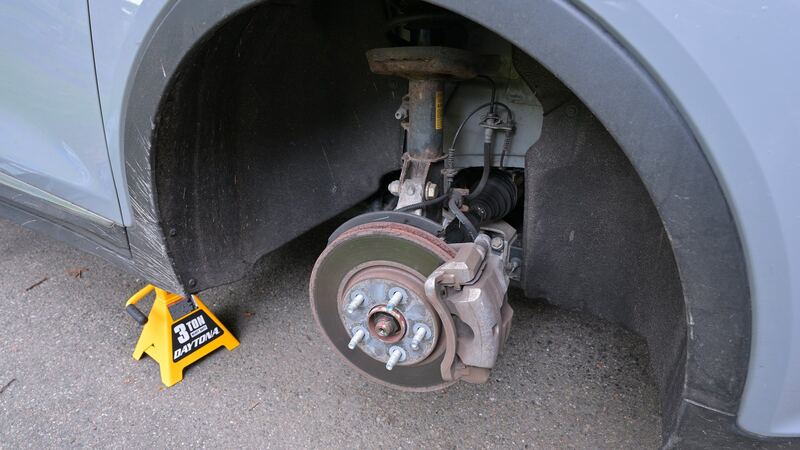
- Grinding or scraping. The pad material is gone and metal is hitting the rotor. Now you're buying rotors too, and stopping distances get longer. Don't wait.
- Pulsing pedal or shaking steering wheel. Usually uneven rotor wear. New pads alone won't fix it.
- Hard, high pedal that takes a lot of leg. On a Malibu this is often a loss of brake assist, not worn pads. NHTSA complaints from 2017-2020 Malibu owners describe a stiff pedal, and in at least one case a shop said the pads were fine and the vacuum pump was the problem.
- ABS or brake warning lights with grinding at random times. That points at sensors or the brake control module, which leads to the recalls below.
Recalls to check first (free at the dealer)
- 2016 Malibu built March 7-12, 2016 (recall 16V272). The electronic brake control module's memory chip may fail, knocking out ABS and stability control. Dealers replace the module for free.
- 2018 Malibu (recall 18V576). Rear brake caliper pistons may have a coating problem that lets gas pockets form and reduces rear braking. Dealers bleed the brake system for free.
Run your VIN at nhtsa.gov/recalls before paying anyone for brake diagnosis. If one of these is open, the dealer handles it at no charge.
Easy things to check yourself
- Look through the wheel spokes. If the outer pad looks about as thin as a few stacked coins, it's due.
- Check the brake fluid level in the reservoir under the hood. A falling level usually means worn pads (the pistons sit further out), but a fast drop can mean a leak.
- Notice when the noise happens. Squeal only on the first stop of a damp morning is often surface rust and goes away. Noise on every stop is real wear.
What to ask the shop
- "Is this quote for front, rear or both?"
- "Do the rotors measure within spec, or do they need replacing?" Ask to see the measurement.
- "Are these OEM-grade pads, and what's the warranty?"
- "If the pedal is hard, did you test the vacuum pump before quoting pads?"
- "Did you check my VIN for open brake recalls?"
Is it worth fixing?
Always. Brakes aren't a repair-or-replace decision, they're a fix-it-now item. A pad job is a few hundred dollars, and catching it at the squeal stage instead of the grind stage keeps you from buying rotors you didn't need.
More Malibu info lives on the Chevrolet Malibu page. Seeing "Shift to Park" on the dash too? Read our Malibu Shift to Park guide. Prices checked October 14, 2026.