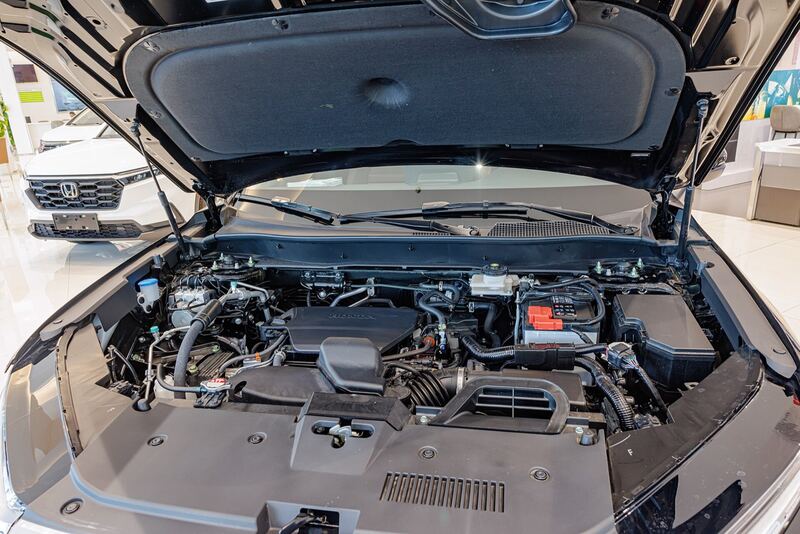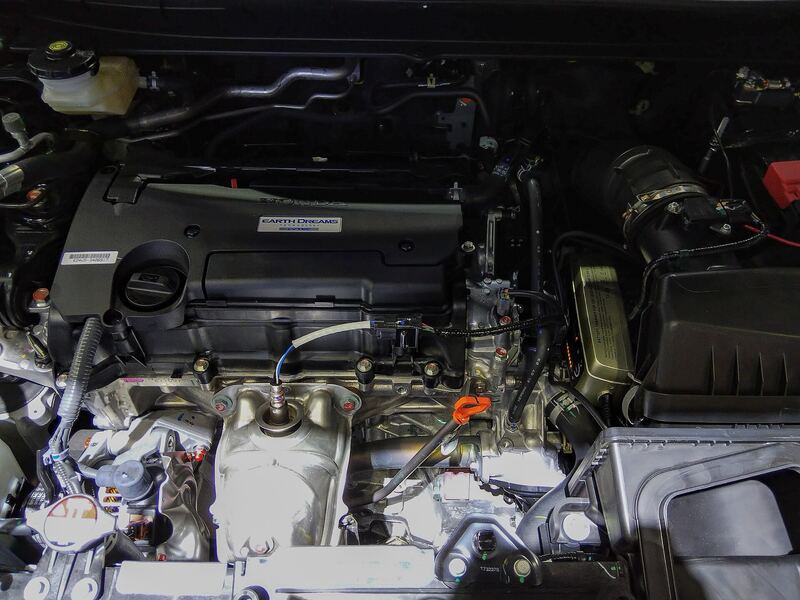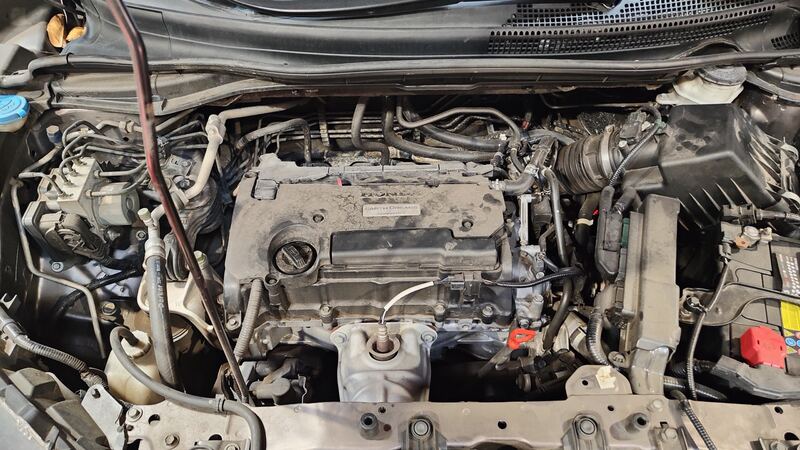
The sixth-generation CR-V (2023 on) comes as a 1.5-liter turbo or a hybrid. Most will never have an AC problem. But when one does, it's usually sudden: cold yesterday, warm today. That pattern points toward the compressor or an electrical fault more than a slow leak.
What Honda knows so far
In a March 21, 2025 "Request for Visit", American Honda asked dealers to report 2024-2025 Civic 1.5L and 2025 CR-V 1.5L turbo vehicles where the AC was blowing warm and the compressor was found seized (DTC 38810 is cited). Owners may also notice the windshield is slow to defrost. Honda told dealers to make no repair attempts until its engineers inspected the car, because it wanted to understand the cause. No cause or fix was stated in that document.
Owner reports line up. A 2024 CR-V owner told NHTSA in August 2026 that the AC quit, the dealer said the compressor was bad and covered under warranty, but the Honda part wasn't available and there was no delivery date. Another 2024 owner mentioned AC water puddling, and a 2023 owner reported a bubbling noise from the driver's vent with the heat on.
What AC repairs cost on a 2023+ CR-V
| Repair | Model years | Estimated cost (RepairPal) |
|---|---|---|
| AC recharge | 2023, 2024, 2026 CR-V | $325 to $422 |
| AC recharge | 2025 CR-V | $313 to $410 |
| AC condenser replacement | 2023, 2024, 2026 CR-V | $620 to $745 |
| AC condenser replacement | 2025 CR-V | $607 to $733 |
| AC compressor replacement | 2023 CR-V | $1,790 to $1,927 |
| AC compressor replacement | 2024, 2026 CR-V | $1,319 to $1,597 |
| AC compressor replacement | 2025 CR-V | $1,777 to $1,914 |
| Receiver drier assembly | CR-V | $363 to $538 |
If the car is still under Honda's basic 3-year/36,000-mile warranty (KBB lists those terms for the 2023 CR-V), a failed compressor should be a warranty repair. Outside of it, the compressor is the big-ticket item.
How to tell what's wrong
| What you notice | Likely cause |
|---|---|
| Was cold, suddenly warm | Seized compressor, compressor clutch, fuse or relay |
| Slowly getting warmer over weeks | Refrigerant leak (condenser, line, seal) |
| Cold while driving, warm at idle | Low charge, condenser airflow or cooling fan |
| Cold air but very weak airflow | Blower motor or clogged cabin filter |
| Warm after hitting road debris | Damaged condenser up front |
Easy checks before you pay
- Swap the cabin air filter if airflow is weak. It's behind the glove box.
- Look through the grille at the condenser for holes, oily spots or bent fins.
- Check the AC fuses listed in your owner's manual.
- Note when it fails (idle vs highway, hot vs mild days). Intermittent problems are hard for dealers to reproduce.
Hybrid owners: this isn't a DIY job
Hybrids typically use an electric, high-voltage AC compressor. A Brake & Front End tech article explains that these compressors need a special ester-based oil to protect the motor windings, that standard PAG oil and many leak dyes can break down that insulation, and that Honda and Toyota don't approve dye for their hybrid systems. The high-voltage system also has to be shut down before service. In other words, skip the parts-store recharge can and the shop that only does gas cars.
What to ask the shop or dealer
- "Is the compressor seized, or is it a clutch, fuse or electrical fault?"
- "Is this covered under my warranty, and has Honda issued any bulletin for my VIN?"
- "For a hybrid, are you using the correct compressor oil, and no dye?"
- "Is the receiver drier or expansion valve included in the quote?"
- "How long is the parts wait, and can I get a loaner?"
Is it worth fixing?
Yes. A 2023+ CR-V is a newer, valuable SUV, and working AC also helps defog the windshield, which is a safety thing. If you're under warranty, push for a covered repair. If you're not, get a written diagnosis before paying close to $2,000 for a compressor.
More CR-V fixes are on the Honda CR-V repair page. Brakes due too? Read our CR-V brake pad replacement cost guide. Prices checked October 14, 2026.